
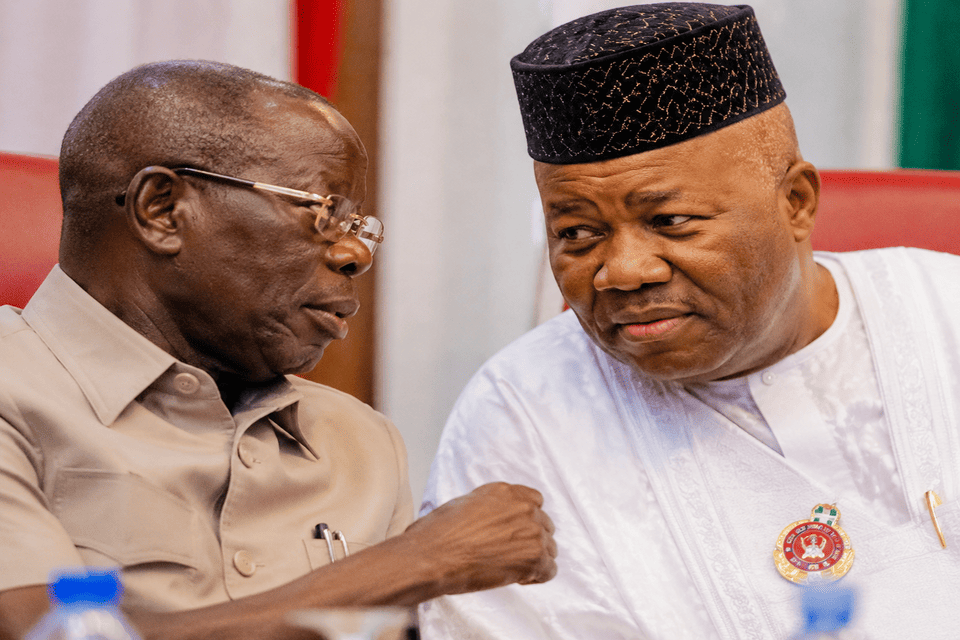
In a bold move that’s igniting political discussions, Adams Oshiomhole, the former National Chairman of the All Progressives Congress (APC), is calling for Senate President Godswill Akpabio to step down over some new Senate leadership rules.
Oshiomhole has raised eyebrows by questioning Akpabio’s role as Senate President, pointing out a glaring inconsistency in the proposed rule that would require senators to have served eight consecutive years before they can take on that position. He argues that Akpabio, who was the Minority Leader during his first term in the 8th Senate, doesn’t meet this new requirement since he hasn’t completed eight years in the Senate, even when factoring in his current term.
His criticism was sharp, with Oshiomhole insisting that Akpabio should set a good example. If this rule goes through, he believes Akpabio would have to resign from the Senate President role because he lacks the “appropriate qualifications” as outlined in the new standards.
“The Senate President (Akpabio) was a minority leader, a key officer during his first term as a senator in the 8th Senate. Now he’s the one presiding and asking us to change those rules. As it stands, the Senate President hasn’t even spent up to 8 years in total, counting both his previous and current terms. So if we pass this rule that requires 8 consecutive years to become Senate President, he should lead by example and step down because he’s presiding without meeting the necessary qualifications,” Oshiomhole stated, addressing Akpabio’s position on the Senate leadership qualifications.
This political drama unfolds as concerns grow about the Senate’s leadership direction under Akpabio and the shifting dynamics within the National Assembly. Oshiomhole’s comments have really brought attention to the qualifications of our elected leaders, sparking discussions about what the Senate leadership standards should be and what this could mean for Akpabio’s time in office.
As this debate continues, it’ll be interesting to see how the Senate tackles the issue, with opposition members and political analysts keeping a close eye on how things develop.
Source: AIT TV
