
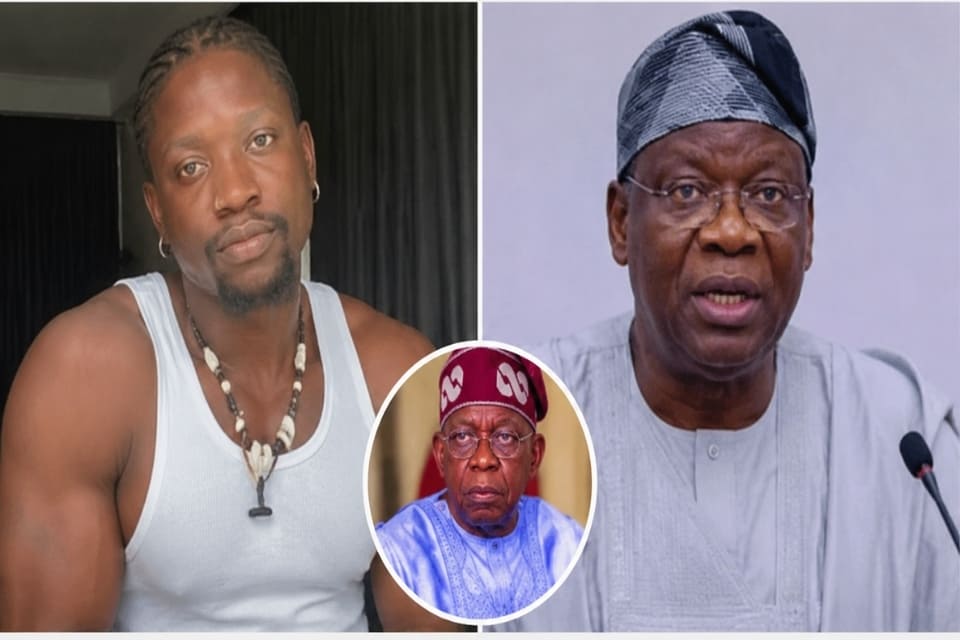
Lagos, Nigeria – A political dispute has broken out after the Presidency accused social media commentator Martins Vincent Otse, known as VeryDarkMan (VDM), of circulating a fake audio clip claimed to be from President Bola Ahmed Tinubu. The situation has drawn sharp responses and threats of legal action.
The issue began when a video attributed to President Tinubu appeared online. The clip contained a voice speaking on topics including insecurity, the 2027 election, World Bank loans, and the political opposition. The recording quickly spread on social media.
The Presidency, through Bayo Onanuga, Special Adviser to the President on Information and Strategy, publicly denied that the audio was genuine. Onanuga said the recording was fabricated and misleading, and accused VDM of sharing the content. On his social media account, Onanuga wrote:
“This VDM needs to face the weight of the law for being the conveyor and disseminator of a fake audio of President Tinubu. This is a clear case of an egregious abuse of the social media platform.”
Onanuga maintained that the claims in the audio were not true and indicated that legal measures could be taken against VDM for spreading misinformation that could damage the President’s reputation.
Independent fact‑checking later found that the altered recording did not come from VDM’s original videos. Instead, unknown individuals are believed to have created the manipulated clip by inserting a generated voice into parts of real footage, which misled viewers into thinking VDM was responsible.
Despite the evidence suggesting manipulation, the Presidential spokesman’s call for prosecution has continued, triggering discussions about misinformation and how the government handles viral online content.
VDM responded strongly to the accusations in several videos and social media posts. He denied responsibility for the altered recording, saying that he would not defend or support fake content and urging Nigerians to be cautious about misinformation.
In a widely shared video response, VDM called Onanuga “a stupid old man,” and criticised him for focusing on this issue instead of addressing national problems such as insecurity, kidnappings, and governance challenges. He referenced reported abductions in Oyo State to underline his point.
VDM also argued that the government was unfairly targeting him because of his criticism of the administration, suggesting that critics wanted to silence dissent rather than tackle real issues.
The dispute has sparked conversation across Nigeria about the impact of misinformation, the responsibilities of public officials in responding to it, and how quickly allegations should be verified before action is taken. Some people have supported rigorous action against fake content, while others have criticised the Presidency’s response as disproportionate given the evidence.
Lawyers representing VDM noted that a simple check of his social media accounts would have shown that he did not originally post the fake audio. They criticised the verification process used before the accusation was made.
The incident highlights growing concerns in the country about artificial intelligence‑generated content, social media manipulation, and how false or altered media intersects with politics and public discourse as Nigeria approaches the 2027 general elections.
